


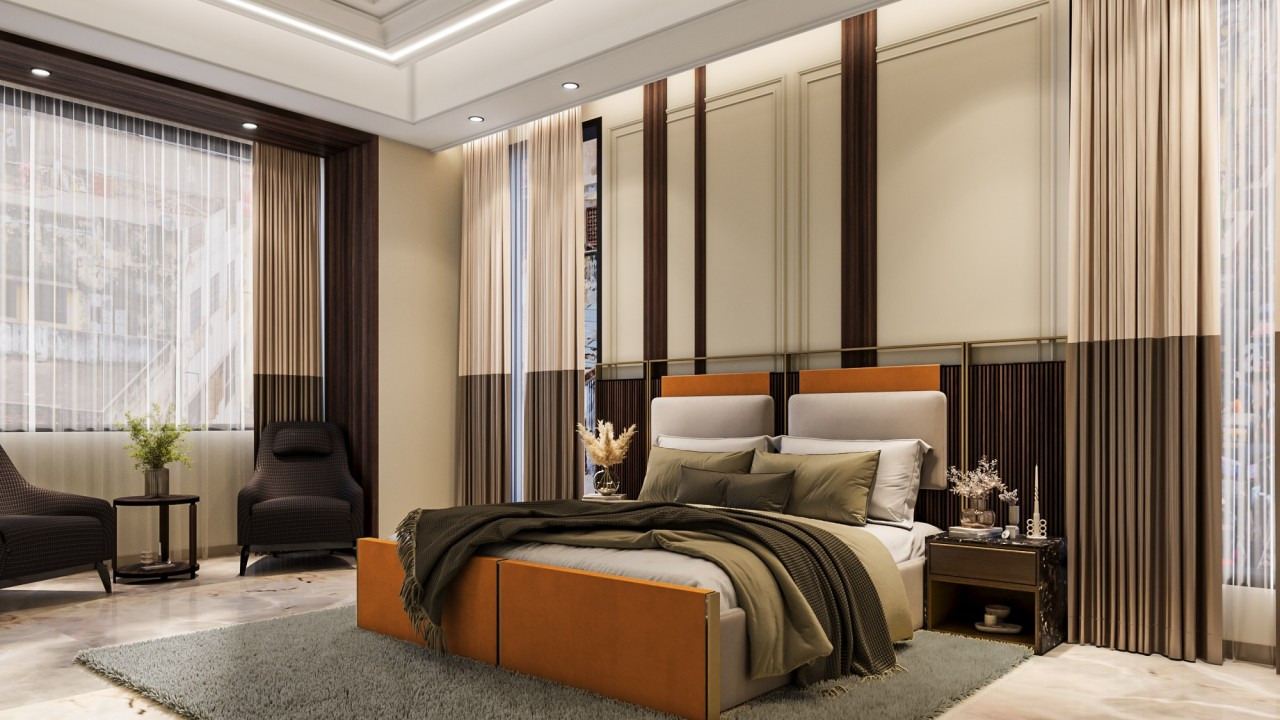
Walk into two different rooms of the same size, with the same furniture budget, and you can still have two completely different emotional experiences. One space might feel calm and spacious; the other might feel cramped or strangely stressful. You might not be able to explain why, but your body knows. Your heart rate changes slightly. Your attention shifts. You either want to linger or leave.
That “why” is where design stops being only an art and starts looking a lot like a behavioral science. Good designers don’t just decorate—they shape how people feel, think, and behave in a space. They draw from psychology, neuroscience, perception science, ergonomics, and even environmental health to create rooms that support the life you want to live inside them.
This article explores the science behind how designers use psychology to improve your environment—from color and light to layout and identity—so your home (or office) works with your brain instead of against it. And yes, we’ll use the phrase interior design where it belongs: as a bridge between aesthetics and human well-being.
Why Your Brain Reacts to Rooms Like They’re Experiences
Humans are environment-sensitive creatures. Long before we lived in houses and apartments, our nervous systems evolved to scan our surroundings for safety, resources, and threats. That evolutionary programming still runs quietly in the background.
Modern spaces trigger ancient instincts:
- Can I see what’s coming? (visibility and control)
- Do I have shelter? (coziness, boundaries, cover)
- Is there order? (predictability and clarity)
- Do I belong here? (identity cues and familiarity)
Even if your conscious mind is focused on work or conversation, your brain is constantly processing environmental signals. This is why certain spaces feel restorative and others feel draining. The science behind design is essentially the science of how environments influence cognition, mood, and behavior.
Designers translate that knowledge into practical decisions: where to place a chair, how to soften sound, what color temperature to choose for lighting, how open a space should feel, and which objects will communicate “this is your home.”
Environmental Psychology: The Backbone of Design Decisions
Environmental psychology is the study of how the physical environment affects human feelings and actions. Many principles used by designers map cleanly onto this field, even if not every designer labels it that way.
Key ideas include:
1) Cognitive load and visual complexity
Your brain has limited processing capacity. When a space is cluttered, overly busy, or visually inconsistent, it can increase cognitive load—meaning your brain must work harder just to interpret what it’s seeing. That extra effort can translate to fatigue, irritability, or a sense of “I can’t relax here.”
Designers reduce cognitive load by creating:
- visual hierarchy (clear focal points)
- fewer competing patterns
- consistent materials and repeated shapes
- storage systems that hide chaos
The goal isn’t sterile minimalism; it’s manageable complexity. A room can be rich and layered without feeling chaotic if there’s a coherent structure.
2) Control, autonomy, and comfort
People feel better in spaces where they can make choices—lighting levels, seating options, privacy zones, or temperature control. This is particularly important in workplaces, hospitality spaces, and shared homes.
Designers use:
- dimmers and layered lighting
- movable seating
- flexible furniture
- curtains, screens, or partial dividers
…to give users a sense of agency. Feeling “trapped” by a layout or overly exposed in a room can subtly raise stress.
3) Place attachment: why you love certain spaces
Place attachment is the emotional bond people form with environments. Your favorite room in your home likely supports routines you value and reflects your identity. Designers nurture place attachment by incorporating personal objects, meaningful materials, and visual cues that signal belonging.
A room that looks good on social media but doesn’t reflect the person living there often feels oddly cold. A room that is “imperfect” but aligned with identity tends to feel more comforting.
The Psychology of Layout: How Movement Shapes Mood
A floor plan isn’t just functional—it scripts behavior. Designers pay attention to how your body moves through a space because movement influences emotions and social interaction.
Flow and friction
- Good flow means you can move naturally without bumping into obstacles.
- Friction points occur where pathways are cramped, corners are awkward, or furniture blocks movement.
Friction in a layout can create micro-stress. It’s the daily annoyance of squeezing past a coffee table, navigating chairs that are always in the way, or walking into sharp edges. These tiny stressors accumulate.
Designers often aim for:
- clear circulation routes (especially between entry, kitchen, and living zones)
- appropriate spacing around dining tables and beds
- furniture scaled to the room (oversized pieces compress perception)
Prospect and refuge: the “safe cave with a view” effect
One of the most powerful environmental principles is prospect and refuge: humans prefer spaces where they can see out (prospect) while feeling protected (refuge). Think of sitting with your back to a wall, facing a doorway, or curling into a reading nook that overlooks the room.
Designers apply this by:
- placing seating where people can see entrances
- using rugs and lighting to create “nests”
- adding high-backed chairs or built-in benches
- creating corners and alcoves that feel sheltered
If a room feels unsettling, it may be because it lacks refuge, leaving the body feeling exposed.
Social distance: designing for interaction or privacy
Furniture arrangement affects how people talk. Seats facing each other invite conversation; seats lined against walls discourage it. A long, narrow room can become a “corridor” rather than a gathering space unless it’s broken into zones.
Designers choose layouts based on the social intention:
- Do you want lively gatherings?
- Quiet co-working?
- A family space where people can be together but doing different things?
Good design supports both togetherness and retreat. Constant togetherness increases tension; constant isolation increases loneliness.
Color Psychology: More Than “Blue Is Calm”
Color psychology is real—but it’s not a simplistic chart of emotions. The impact of color depends on saturation, brightness, context, culture, and personal history. Still, designers use color intentionally because it changes perception and mood.
Hue, saturation, and brightness
- High saturation (very vivid colors) increases stimulation and can energize or overwhelm.
- Low saturation (muted tones) tends to feel calmer and more sophisticated.
- Brightness affects spaciousness: lighter values can expand a room; darker values can cozy it up.
Warm vs. cool tones
- Warm tones (reds, oranges, warm beiges) can feel intimate, lively, and grounding.
- Cool tones (blues, greens, cool grays) can feel spacious, airy, and restful.
But balance matters. Too cool can feel sterile; too warm can feel claustrophobic. Designers often use one temperature as a base and the other as an accent to create depth.
Color and behavior
Color can influence how people act in spaces:
- In dining areas, warmer tones often feel inviting and can support sociability.
- In bedrooms, softer low-contrast palettes can reduce stimulation and support rest.
- In offices, a restrained palette with a few energizing accents can support focus without feeling dull.
The hidden power of contrast
It’s not only the color—it’s the contrast. High contrast creates energy and visual sharpness. Low contrast creates calm and unity. If your home feels stressful, it might not be because of a “bad color,” but because contrasts are too harsh and frequent.
Light: The Most Underrated Psychological Tool
Lighting affects mood, productivity, sleep quality, and even appetite. Designers treat light as both a practical need and a biological input.
Natural light and circadian rhythm
Your body uses daylight cues to regulate sleep-wake cycles. Insufficient daylight exposure can contribute to low mood and poor sleep. Designers maximize natural light by:
- using sheer window treatments instead of heavy drapes
- placing mirrors to bounce light deeper into rooms
- choosing reflective finishes strategically
- keeping window areas visually uncluttered
Color temperature: warm vs. cool light
- Warm light (lower Kelvin) feels cozy and relaxing—better for evenings.
- Cool light (higher Kelvin) feels alert and crisp—better for tasks and daytime.
Many homes suffer from a mismatch: harsh cool overhead lights at night, or dim yellow lighting in task-heavy spaces like kitchens. Designers often layer lighting so your home can shift with your daily rhythm.
Layered lighting: why overhead-only feels bad
A single ceiling light creates flat illumination and shadows in unflattering places. Layered lighting uses:
- ambient lighting (general glow)
- task lighting (focused, functional)
- accent lighting (visual interest and depth)
This approach helps the brain interpret the room as warm, dimensional, and safe—more like sunset and firelight, less like a waiting room.
Texture, Materials, and the Sense of “Soft Safety”
Your brain reads texture visually, and your body reads it physically. Spaces that feel comfortable often have a mix of textures that communicate softness and warmth, even before you touch anything.
Why texture reduces stress
Hard, shiny, uniform surfaces (all glass, metal, glossy tile) can feel cold and echoey. Softer materials absorb sound and “warm up” visual perception. Designers use:
- rugs, curtains, upholstered furniture
- matte finishes instead of all glossy
- wood grain and natural fibers
…to create a sense of lived-in ease.
Biophilic design: the psychology of nature indoors
Biophilic design integrates natural elements—plants, wood, stone, water, daylight, natural patterns—because humans tend to relax around cues of nature. Even small additions like a plant cluster, natural textures, or landscape art can reduce mental fatigue and improve mood.
Sound, Smell, and the “Invisible” Side of Comfort
Design is not only visual. A beautiful room can still feel stressful if it’s loud, echoey, or smells stale.
Acoustic comfort
Hard surfaces reflect sound. High echo makes the brain work harder to process conversation. Designers manage acoustics with:
- soft furnishings (rugs, curtains, cushions)
- upholstered seating
- bookshelves and layered decor
- acoustic panels (in offices or media rooms)
Scent and emotional memory
Smell is tightly linked to memory and emotion. A space that smells clean, fresh, or personally comforting can feel instantly more welcoming. Designers sometimes recommend:
- better ventilation
- air purifiers
- subtle scent strategies (not overpowering)
The psychological goal: create an environment that your nervous system interprets as safe and pleasant.
Clutter, Organization, and the Psychology of “Mental Noise”
Clutter is not only mess—it’s unfinished business. Each visible item can become a micro-demand on attention: “deal with me,” “remember me,” “decide where I go.” This can keep the brain in a low-level stress state.
Designers address clutter scientifically by designing systems that match real behavior:
- Drop zones near entryways for keys, bags, shoes
- Closed storage for visual calm
- Open storage only for curated or frequently used items
- Containers that reduce decision fatigue (“everything has a home”)
A common mistake is designing storage for an imaginary version of yourself. Good design matches the version of you that exists on a tired Tuesday.
The Psychology of Personalization: Why “Perfect” Can Feel Empty
A space becomes emotionally supportive when it reflects identity. Designers sometimes call this “storytelling,” but psychologically it’s about belonging and coherence: the environment makes sense with the self.
Self-expression and emotional regulation
Personal objects—photos, books, art, travel finds—can serve as emotional anchors. They remind you of relationships, values, and accomplishments. This can stabilize mood, especially during stress.
The difference between trendy and meaningful
Trends can be fun, but a space built only from trends can feel disposable. Meaningful spaces often include:
- items with history
- handmade textures
- art you actually connect with
- colors that suit your life (not just your feed)
Designers balance aesthetic unity with personal authenticity, because mental comfort increases when the space feels like “yours.”
Designing for Different Psychological Needs
People don’t all want the same atmosphere. Psychology helps designers tailor choices to specific needs.
For anxiety: reduce threat cues and increase control
Helpful design moves:
- soft lighting options
- fewer sharp contrasts
- refuge seating (cozy corners)
- predictable organization (less visual noise)
- soothing textures
For ADHD: reduce distractions and support routines
Helpful design moves:
- clear zones for tasks
- simple visual backgrounds where focus is needed
- labeled storage and easy-access organization
- good task lighting
- fewer “catch-all” surfaces that become clutter magnets
For depression: increase light, movement, and accessible joy
Helpful design moves:
- maximize daylight exposure
- create easy pathways (reduce friction)
- choose uplifting accents (not necessarily bright, but alive)
- make enjoyable activities easy to access (a ready-to-use reading chair, art supplies visible, music setup effortless)
For remote work burnout: create boundaries
Helpful design moves:
- a distinct workstation, even if small
- visual separation (screen, shelf, rug)
- lighting that signals “work mode” vs “rest mode”
- storage to close the workspace at day’s end
Designers often think like behavioral coaches: “How do we make the good habit easier and the draining habit harder?”
The “Third Place” Feeling at Home: Comfort Without Stagnation
Some of the most beloved spaces—cafés, libraries, cozy lounges—feel social, comforting, and energizing. Great home design can borrow that “third place” psychology.
How designers recreate it:
- layered warm lighting
- textured seating
- a sense of discovery (books, art, objects)
- defined zones (a reading nook, a coffee spot)
- comfortable acoustics
A home doesn’t have to be a showroom. It can be a supportive environment that makes everyday life feel more humane.
Practical, Science-Informed Ways to Improve Your Space Right Now
You don’t need a full renovation to apply design psychology. Here are evidence-aligned moves you can implement quickly:
- Fix the lighting first
Add a floor lamp, table lamp, or warm bulb option. Avoid relying only on overhead lighting at night. - Create one refuge spot
Put a chair with a side table and a lamp in a corner where you feel protected but can still see the room. - Reduce visual noise in one zone
Clear one surface completely—your nightstand, kitchen counter, or desk. Let your brain experience the relief. - Improve flow
Move one piece of furniture that creates a bottleneck. Even a few inches can change how a room feels. - Add natural elements
A plant, a wood tray, a stone bowl, or nature-inspired art can shift mood more than you’d expect. - Use color strategically
If repainting is too much, introduce color through textiles: pillow covers, a throw, curtains, or a rug. - Make daily routines easier
Create a drop zone by the door. Store chargers where you actually sit. Place laundry baskets where clothes end up.
Each of these reduces friction or increases comfort—both of which have a psychological impact.
What Designers Really “Design”: Your Attention, Energy, and Well-Being
At its best, design is not about impressing visitors. It’s about supporting the person who lives there. It’s about shaping your attention—what you notice, what feels easy, what feels safe, what feels inspiring, what feels restful.
When designers use psychology well, they create spaces that:
- lower stress responses
- improve focus and productivity
- support sleep and recovery
- encourage connection
- reinforce identity and belonging
- reduce daily friction and decision fatigue
In other words, they don’t just design rooms. They design experiences.
Conclusion
Your environment is not neutral. It is constantly interacting with your nervous system—either helping you recover or asking your brain to work harder than it needs to. That’s why small design changes can sometimes produce outsized emotional relief.
The science behind interior design is ultimately the science of human behavior: how light affects your rhythm, how layout affects your social life, how clutter affects your cognitive load, how textures affect your sense of safety, and how personalization affects your belonging.
You don’t have to become a designer to benefit from this knowledge. You only need to start noticing what your space makes you feel, and then make small, intentional shifts that support the life you want.
If you tell me what kind of space you’re working with (bedroom, living room, office), your constraints (budget, size, rental vs. owned), and what you want to feel there (calm, energized, cozy, focused), I can suggest a psychology-based plan tailored to your room.