
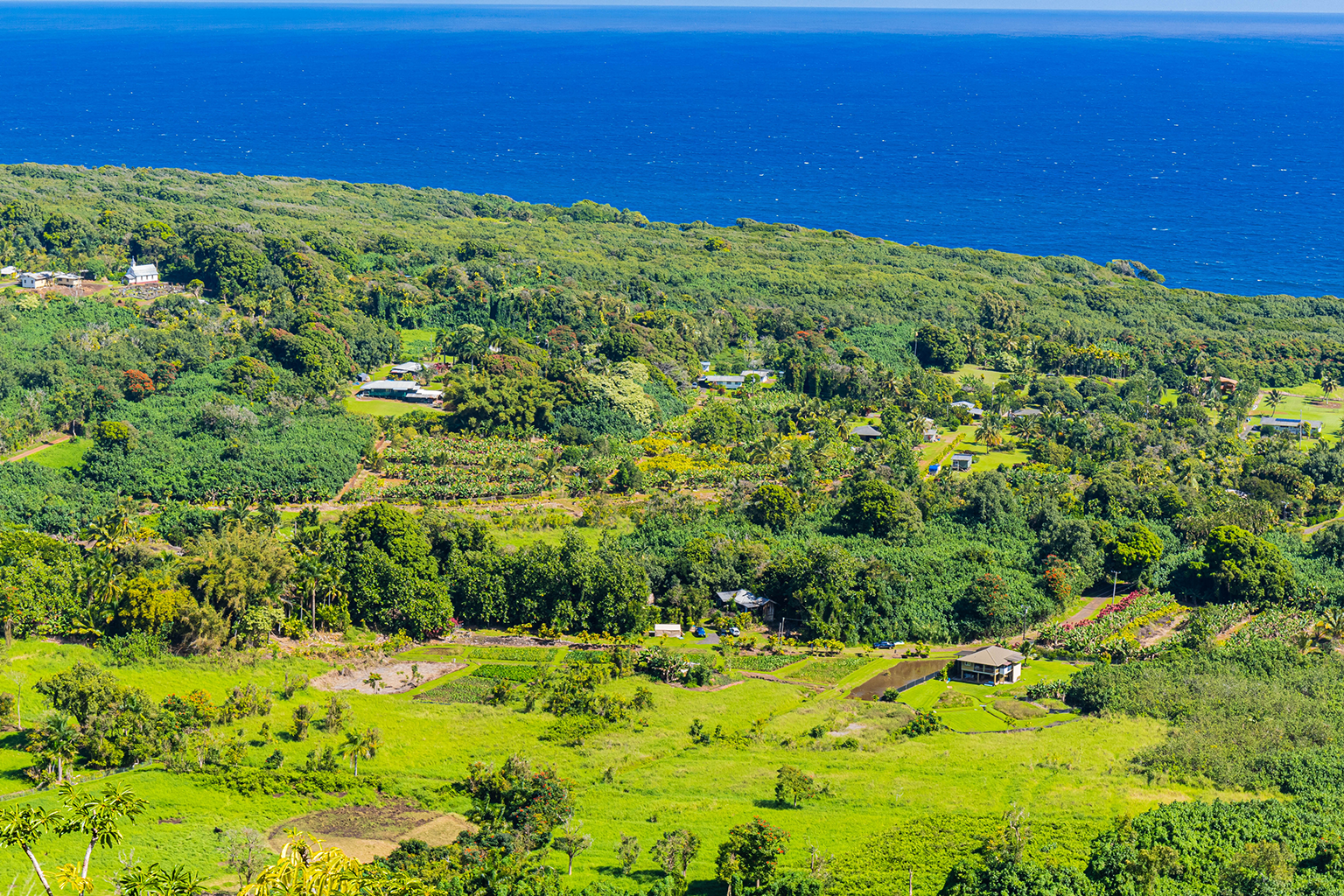
An aerial view of Maui’s North Shore, where coastal roads and inland parcels show how land is being developed.
Table of Contents
- Where Haiku Is Located in Maui
- Coastal Haiku
- Haiku Mauka
- Mountain Haiku
- How Climate Changes Across Haiku, Maui
- Zoning and CPR Rules That Dictate What You’re Allowed to Build
- What Is CPR Land?
- How Elevation and Location Impact Property Values in Haiku
- Dave Futch Is Your Go-To Expert on Haiku, Maui
- Start Living in Haiku, Maui
On Maui’s North Shore, just east of Paia and away from the resort buzz of West and South Maui, you’ll find the unincorporated community of Haiku.
Packed within this small geographic area are varying terrain, vegetation, microclimates, and infrastructure quirks.
Locals and real estate professionals even describe Haiku, albeit informally, in three zones: Coastal Haiku, Haiku Mauka, and Mountain Haiku. Each area feels distinct and comes with its own environmental considerations and land-use realities.
These three labels won’t appear on a county map, but they reflect real differences that shape everything from day-to-day routines to long-term maintenance costs. These are important things to consider if living in Haiku, Maui is something you’re pondering on.
To help you find the best area for your real estate goals, here’s a guide that breaks down what you need to know about Coastal Haiku, Haiku Mauka, and Mountain Haiku.
Where Haiku Is Located in Maui
Haiku sits along Maui’s North Shore, where rolling hills meet the Pacific and the landscape shifts from sunlit coastlines to mist-covered slopes.
This part of Maui is known for its rural atmosphere and small-scale residential developments. The town is also quite near to Paia, Ho‘okipa Beach, and Central Maui, which means you’re never too far from surf spots, boutiques, or essential services.
The weather varies noticeably depending on where you are. Closer to the ocean, days tend to be drier and breezier. As you move further inland, the air gets cooler, vegetation is denser, and rainfall is more frequent.
Real estate options around the community include:
- Established plantation-style homes
- Modern residences on multi-acre lots
- Condominium Property Regime (CPR) lots (division of a single parcel into separate legal units, each with its own build rights)
- Off-grid and semi-off-grid homes designed for sustainability and independence
Coastal Haiku
Coastal Haiku is the area that’s on or closer to the coastline. This part of the community generally experiences a warmer, drier climate with noticeably less rainfall than areas further inland.
Elevation here typically ranges from sea level to around 500 feet, with areas like lower Pauwela and Kuiaha Point sitting at the higher end. Trade winds are more consistent in Coastal Haiku, helping moderate temperatures and reduce humidity.
Who is Coastal Haiku for
Coastal Haiku often appeals to buyers who prioritize warmth, convenience, and proximity to beaches. From here, there’s easy access to some of the most popular things to do in Haiku, Maui, from surfing and windsurfing to paddleboarding along the North Shore.
It’s ideal for those who want a rural setting without fully disconnecting from other conveniences. With Paia, Ho‘okipa Beach, and Central Maui all within about 20–30 minutes, daily errands, school runs, and beach sessions are all within easy reach.
A snapshot of local real estate
Coastal Haiku features a mix of older plantation-style homes, newer custom builds, and subdivided agricultural parcels. One of the best-known subdivisions in this zone is Haiku Makai, known for its larger lot sizes and favorable terrain.
Parcels tend to be flatter and more usable, making them easier for construction, landscaping, or future expansion. The drier climate also means fewer maintenance concerns — paint jobs, roofs, and siding generally hold up better here than in the other two zones we’ll cover below.
Infrastructure is a plus — many homes in this area are connected to county water or have well-established private systems. Daily travel is fairly straightforward too, with drive times to Paia, Ho‘okipa Beach, and other North Shore destinations typically around 30 minutes or less.
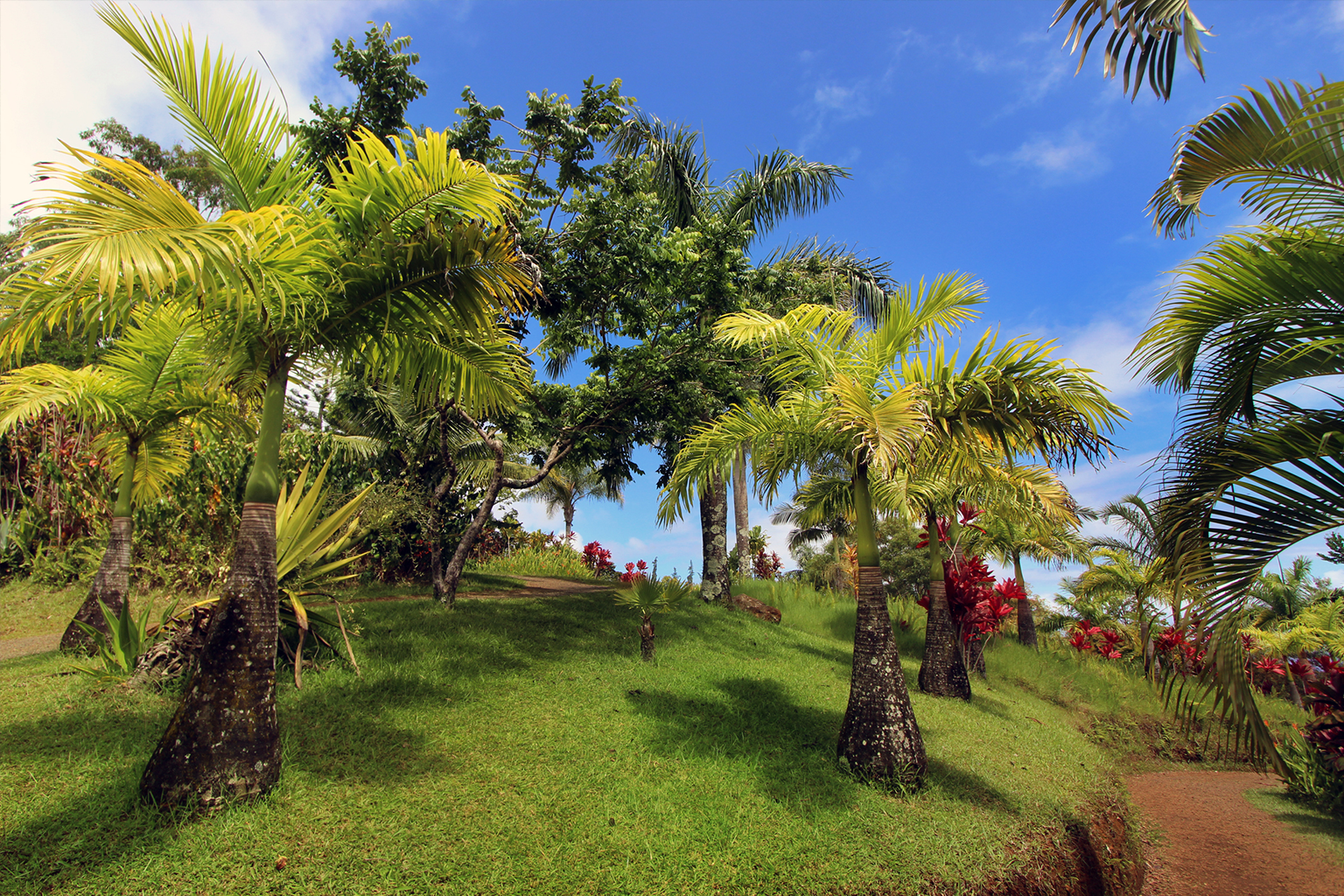
Coastal Haiku generally experiences a warmer, drier climate with noticeably less rainfall than areas further inland.
Haiku Mauka
True to its name, Haiku Mauka (meaning “toward the mountains”) is anywhere between 400 and 1,000 feet in elevation. Locations near landmarks like Giggle Hill are prime examples of this area. The climate here is noticeably cooler and greener, with a balance of sun and rain that supports vibrant vegetation and agricultural use.
Trade winds are still present but softened slightly by the terrain, and temperatures tend to be more temperate than either the coast or mountain regions. The land is fertile, the air is fresh, and there’s a greater sense of privacy, thanks to larger parcels and dense landscaping.
Who is Haiku Mauka for
Haiku Mauka appeals to those looking for privacy, acreage, and flexibility without complete isolation. It’s a strong fit for families, small-scale farmers, equestrian enthusiasts, or anyone who wants enough room to grow, garden, or build while staying connected to town. The area’s elevation offers relief from coastal heat without the full remoteness of mountain zones.
The local real estate landscape
This zone includes neighborhoods like Haiku Mauka subdivision, which is especially known for its equestrian-friendly layout and ~2-acre lots. Many homes are set back from the road, tucked behind long driveways and surrounded by lush foliage.
Properties here often come with agricultural zoning, allowing for orchards, gardens, or animal husbandry. It’s not uncommon to find accessory structures like workshops, barns, or studios. Infrastructure is typically better than in higher-elevation areas — some homes have county water or shared private systems, and driveways are generally navigable year-round.
Mountain Haiku
Mountain Haiku encompasses the uppermost elevations of the region — generally 1,000 feet and above — where the environment starts to drift into rainforest territory. This part of Haiku receives some of the highest rainfall totals on the island, with certain pockets receiving over 120 inches or more per year.
Thick canopies, moss-lined gulches, and long private driveways are typical here. Roads like Awalau and upper Kaupakalua serve as gateways into this higher terrain, but road conditions and access can vary significantly with weather.
Who is Mountain Haiku for
Mountain Haiku is ideal for buyers who prioritize privacy, sustainability, and a deep connection to nature. These properties often attract artists, retreat owners, farmers, and anyone looking to live off-grid or close to it. If you want to build an intentional lifestyle—rain catchment, solar power, food gardens—this is your zone.
It’s also for those who are comfortable with the upkeep and hands-on care that rainforest living requires. Land is abundant and often affordable per acre, but home maintenance is a serious consideration here.
The local real estate landscape
Properties in Mountain Haiku tend to be larger parcels, often with agricultural use or conservation in mind. Homes may be newer builds with green systems, or rustic dwellings that have evolved over time with the land. Off-grid and semi-off-grid setups are common as well, including rainwater catchment, solar energy, and septic systems.
Drive times are longer, and some roads may require 4WD or careful navigation during wet months. But for the right buyer, the reward is the highest degree of privacy, mist-draped mornings, and soil rich enough to support almost any crop they wish to grow.
How Climate Changes Across Haiku, Maui
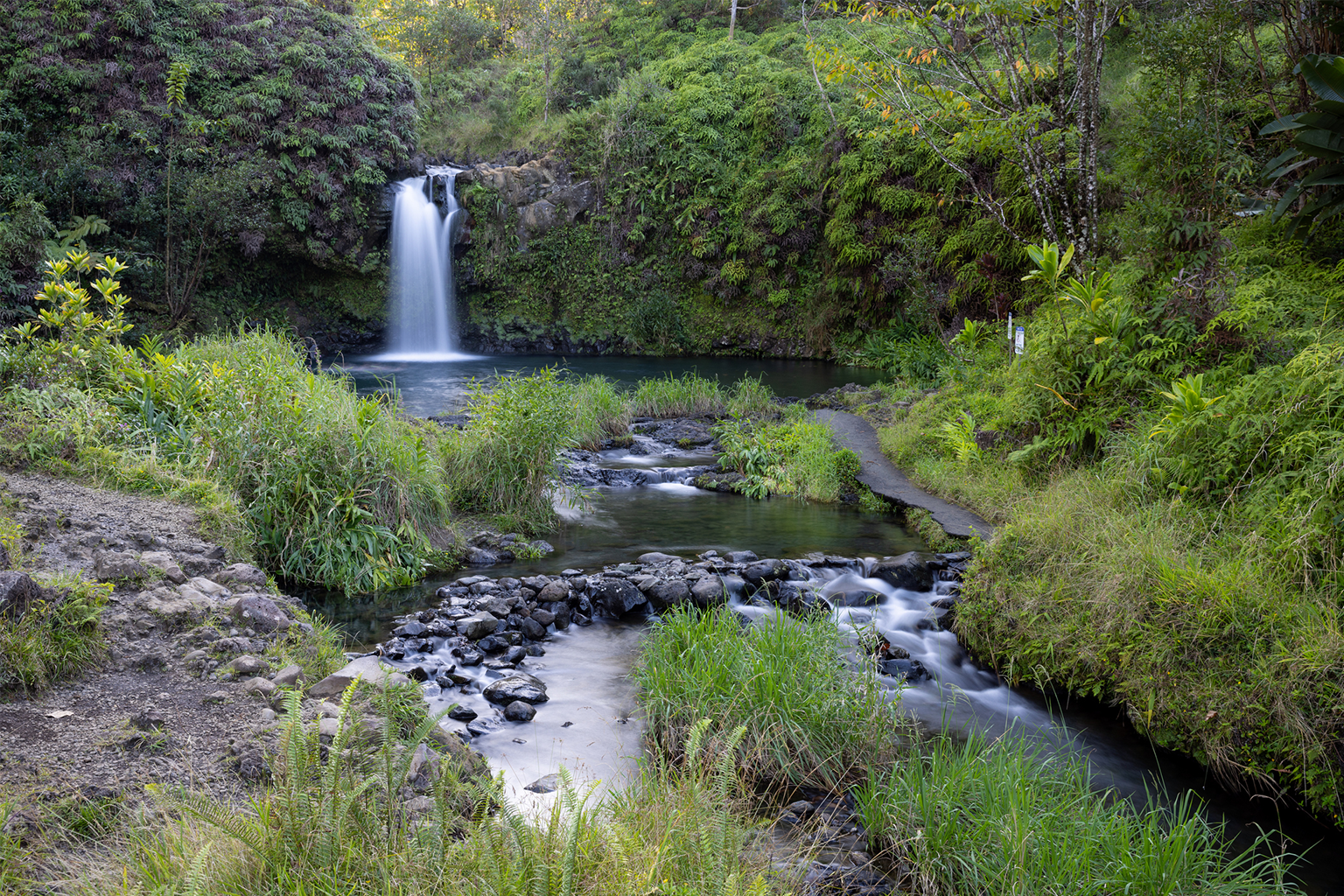
Haiku’s lush terrain reflects higher rainfall and denser vegetation, shaping how land is used and maintained.
The sharp changes in elevation, vegetation, and how trade winds move dictate the microclimates throughout Haiku — and ultimately, how homes are built.
Some lower-elevation parts of Haiku are so dry by comparison that locals half-jokingly refer to them as “Dryku.” These microclimates — often closer to the coast and slightly west-facing — offer a more forgiving climate for construction and daily life. But even in wetter zones, climate can be shaped dramatically by something as simple as how a home is oriented.
Trade winds blow across Maui’s North Shore, and they can either make or break your comfort depending on airflow. A well-positioned home with good ventilation will feel cool and dry, even in summer. Meanwhile, A poorly oriented one might struggle with stagnant humidity or overpowering gusts. Wind also influences mosquito levels, drying times, and whether outdoor spaces get used year-round or avoided during gusty periods.
If you’re considering a real estate investment in Haiku, here’s what to take into account in each zone.
Coastal Haiku design and maintenance considerations
Average rainfall: 40–60 inches/year
Climate: Warm, breezy, fast-drying
- Use UV-resistant roofing and exterior materials for sun exposure
- Maximize trade wind flow with open layouts and cross-ventilation
- Large covered lanais work well for outdoor living year-round
- Minimal drainage or mold concerns compared to inland zones
- Paint, siding, and roofs generally last longer here
Haiku Mauka design and maintenance considerations
Average rainfall: 60–80 inches/year
Climate: Balanced sun and rain, cooler temperatures
- Elevate foundations slightly to keep moisture out
- Incorporate wide eaves and good gutter systems for runoff
- Choose materials resistant to consistent moisture (e.g., fiber cement siding)
- Ensure clear grading and drainage paths around structures
- Consider screened lanais or protected outdoor areas during wetter seasons
Mountain Haiku design and maintenance considerations
Average rainfall: 100–120+ inches/year
Climate: Rainforest conditions, cooler, denser vegetation
- Prioritize rainwater catchment systems and roof design that maximizes collection
- Use mold- and rot-resistant materials (metal roofs, cement siding, treated wood)
- Ensure excellent ventilation to combat moisture buildup inside
- Plan for year-round vegetation control and erosion mitigation
- Off-grid systems (solar, septic, catchment) are often necessary above 1,000 ft
Zoning and CPR Rules That Dictate What You’re Allowed to Build
If you’re living in Haiku, Maui or thinking about moving here, understanding zoning and land use is key to making a smart real estate decision. Haiku is predominantly zoned Agricultural (AG), which means homes here often come with acreage and the potential for much more than just a house.
What does agricultural zoning allow?
AG zoning is one of Maui’s most flexible classifications. It allows for:
- The construction of residential dwellings
- Additional agricultural structures like barns, sheds, or greenhouses
- Farming, animal husbandry, orchards, and even equestrian use
What Is CPR Land?
CPR is a method of dividing a single parcel of land into separate ownership units, each with its own house or cottage rights and distinct legal identity. It’s not the same as a traditional condo building. Instead, it’s a way for large AG parcels to be split between family members, co-owners, or even as a creative investment strategy.
For example:
- Unit A often has rights to build a full-size primary home
- Unit B typically allows for a 1,000–1,500 sq ft cottage
- Units C and D (if permitted) may also be buildable, depending on water availability and CCRs (Covenants, Conditions, and Restrictions)
This setup is common across Haiku and gives buyers more flexibility when choosing land or shared property.
What to know about the water system
Unlike in urban neighborhoods, Haiku properties may not be connected to county water. Depending on the location, a property may use:
- County water meters (hard to come by and highly valued)
- Private wells (common on larger or multi-owner parcels)
- Catchment systems, which collect rainwater for household use
If you’re exploring off-grid or mountain properties, expect a combination of solar, septic, and catchment systems, especially above 1,500 feet.
Practical impacts of zoning and utilities
Whether you’re planning to build, farm, or just want room to breathe, zoning and land-use rules will directly impact:
- Building rights (and what size/type of structure is allowed)
- Access to water and utilities
- Permitting and future resale value
How Elevation and Location Impact Property Values in Haiku
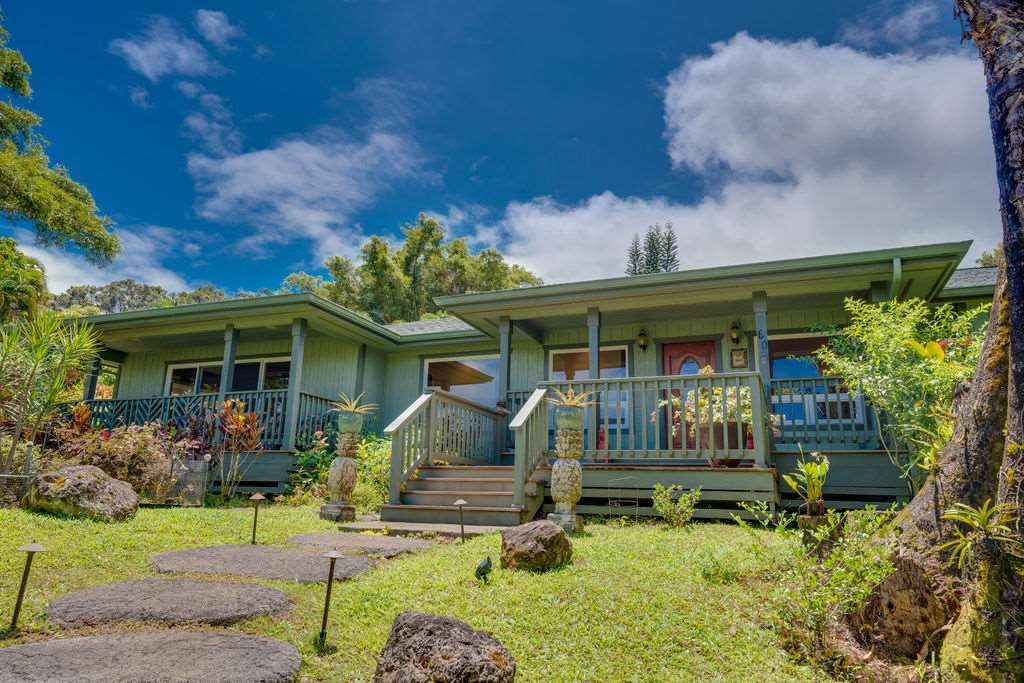
A closer look at a Haiku residence that offers inland living just 10 minutes from the coast.
Property values in Haiku are closely tied to elevation and location, but pricing also varies significantly depending on whether a property is vacant land or a move-in-ready home. Access, rainfall, infrastructure, and land usability often have a greater impact on value than finishes or architectural style. Two properties in the same area can differ widely in price based on development status and build readiness.
In Coastal Haiku, move-in-ready homes tend to command the highest prices in the region. Completed residences commonly fall in the mid-$1.5M range and above, with larger parcels or properties near the ocean reaching $2M+. Easier access, lower rainfall, flatter land, and proximity to Paia and North Shore beaches support consistent demand. Meanwhile, vacant land in this zone can vary widely depending on location and utilities. Larger ocean-adjacent parcels may trade well above $1.5M, particularly when access and zoning are favorable.
In Haiku Mauka, pricing reflects a mix of land value and livability. Homes with existing infrastructure often fall between $1.3M and $2M, depending on acreage, condition, and water systems. At the same time, raw or lightly improved land can be priced noticeably lower, especially on larger agricultural parcels where development costs and access need to be factored in. Buyers often evaluate value based on land usability rather than proximity.
In Mountain Haiku, the difference between land and improved property is even more pronounced. Vacant land in places such as Awalau can start around $800,000 for parcels of roughly 2.5 acres, particularly where infrastructure is limited. Larger tracts may offer lower prices per acre but require significant planning. Move-in-ready homes or improved agricultural parcels typically enter the market closer to $1.1M–$1.3M and above, with pricing increasing as infrastructure, access, and usability improve. Privacy and scale drive value here more than convenience.
Across all zones, buyers in Haiku tend to prioritize how a property supports their lifestyle over cosmetic upgrades. Elevation affects daily routines, maintenance requirements, development costs, and long-term ownership expenses. Understanding whether a property’s price reflects land value, home value, or a combination of both is essential when evaluating true market value in Haiku.
Dave Futch Is Your Go-To Expert on Haiku, Maui
With more than 35 years of experience in Haiku, Maui real estate, Dave Futch brings firsthand knowledge of how these zones function in practice.
With more than three decades of experience in Haiku and Maui’s Upcountry communities, Dave Futch brings insight shaped by long-term residency and hands-on work in the area. A Haiku resident since 1988 and a licensed Maui real estate agent since 1993, Dave understands how microclimates, zoning rules, and land-use realities affect ownership in ways that rarely show up in listings.
Dave has walked these properties through every season. He knows which gulches flood, which driveways become slick after heavy rain, and which elevations support the gardens his clients plan to build. That on-the-ground knowledge helps buyers choose locations that genuinely fit their day-to-day needs.
His experience is matched by a record of professional recognition. Dave was named Realtor® of the Year in 2016, has ranked in the top 3% of all Maui Realtors® multiple years (2019, 2020, 2021, and 2023), and has served as a Director with the REALTORS® Association of Maui. On the selling side, he brings the same clarity and honesty to pricing, presentation, and negotiation, representing Haiku properties with accuracy, confidence, and respect for the land.
A lifelong surfer, local volunteer, and advocate for intentional island living, Dave’s connection to Haiku goes beyond real estate. He helps people find places that make sense for how they want to live.
Start Living in Haiku, Maui
Buying real estate in Haiku requires detailed attention to elevation, access points, land use restrictions, and more. These factors shape long-term property ownership in the area.
That whole process will feel like a breeze with Dave Futch by your side.
Call 808.280.9600 or send an email to make Haiku, Maui real estate as easy as possible.