

30 seconds summary
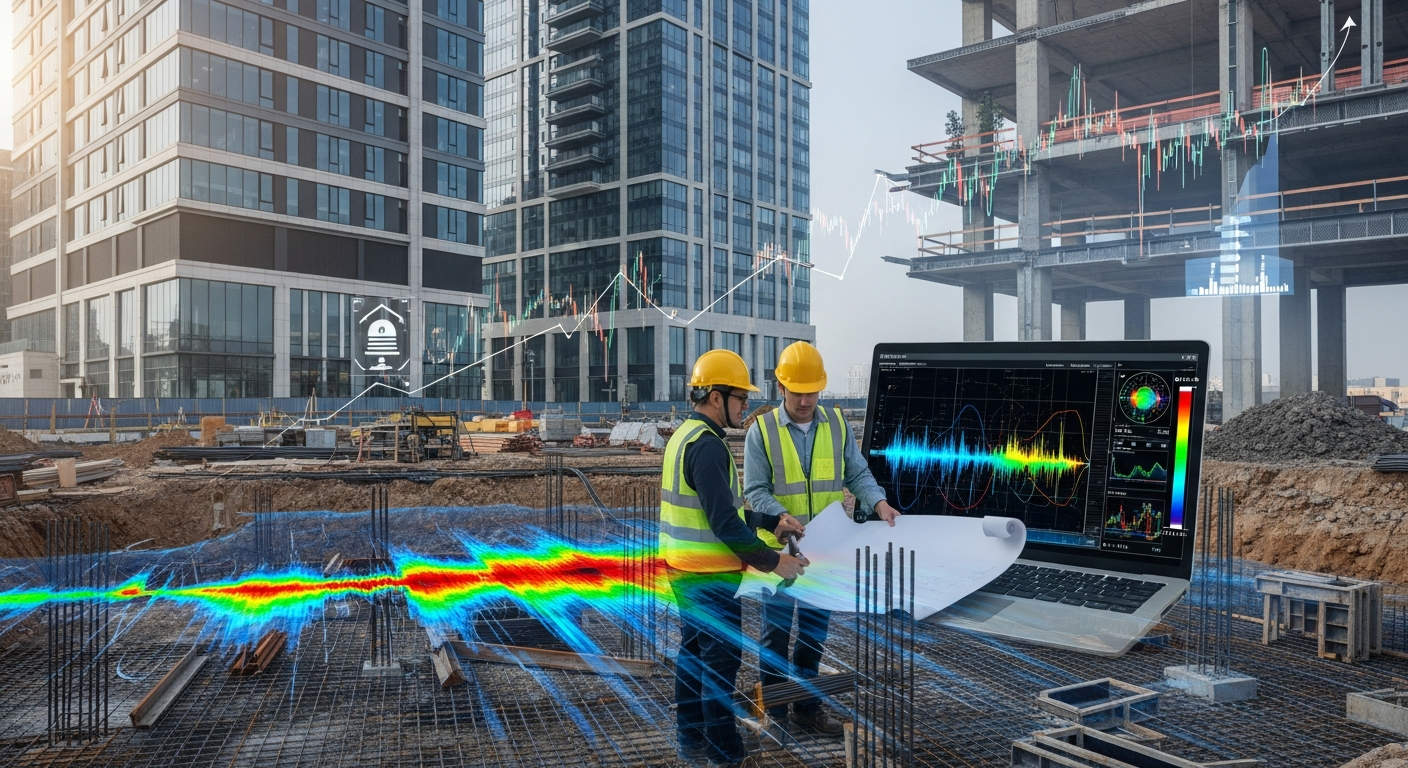
- Seismic data plays a critical role in construction and real estate, providing essential insights into ground stability and earthquake risks. By using advanced seismic technologies, engineers and developers can assess site conditions, design safer buildings, and select appropriate materials.
- This data helps mitigate risks from earthquakes, ensuring structural safety and reducing long-term costs for maintenance and insurance.
- As technology advances, real-time monitoring and AI-enhanced seismic data are revolutionizing building resilience, making seismic considerations an essential part of modern construction and real estate development.
The foundation of any construction project, whether residential, commercial, or industrial, must be solid and secure to ensure the safety and longevity of the structure. Seismic data plays a pivotal role in this regard, providing essential insights into the characteristics of the ground upon which buildings are constructed. As urbanization and infrastructure development expand worldwide, understanding seismic risks has never been more critical. The significance of seismic data in construction and real estate cannot be overstated, especially as advanced seismic technologies are now enabling architects, engineers, and developers to make informed decisions based on a detailed understanding of the geological environment.
Seismic data refers to the information derived from the study of seismic waves and their interaction with subsurface materials. This data is used to assess the stability of the ground and predict how structures will respond to seismic events such as earthquakes. Earthquakes, although relatively unpredictable, can cause extensive damage to poorly designed or built structures. As such, seismic data provides an essential means of mitigating these risks and ensuring that buildings are safe, resilient, and sustainable.
This article will explore the importance of seismic data in construction and real estate, discussing how it contributes to site selection, design, safety, and the use of advanced seismic technologies in building practices.
1. The Role of Seismic Data in Site Selection
The first and perhaps most critical use of seismic data in construction is in site selection. Before any construction project can commence, it is essential to evaluate the ground conditions at the proposed location. Seismic data helps to understand the composition of the soil, the underlying rock formations, and any fault lines that may be present. This is particularly important in regions prone to seismic activity, such as earthquake zones.
Seismic surveys provide valuable information regarding the depth, density, and behavior of underground materials. By examining how seismic waves travel through the earth, engineers can determine the stability of the ground. For example, in areas with loose or water-saturated soils, the risk of liquefaction during an earthquake is higher. Liquefaction occurs when saturated soil temporarily loses its strength and behaves like a liquid, which can lead to catastrophic structural failure. Seismic data can identify these areas, allowing developers to avoid constructing buildings on unstable ground.
In regions where active fault lines exist, seismic data can indicate the likelihood of future seismic events. Fault lines represent fractures in the earth’s crust where earthquakes are more likely to occur. By analyzing seismic activity patterns and the historical record of seismic events in a given area, construction professionals can better assess the potential risks associated with a site. This data is invaluable when making decisions about the location of infrastructure and real estate developments.
2. Design and Engineering Considerations
Once a site is selected, seismic data becomes integral to the design phase of construction. Architects and engineers rely on this data to create buildings that are not only functional and aesthetically pleasing but also able to withstand the forces generated by seismic events. Buildings in seismic zones must be designed with additional safety features to ensure that they can withstand the ground shaking and vibrations that typically accompany earthquakes.
Seismic data informs engineers about the local seismicity and the expected levels of ground shaking, which allows them to calculate the appropriate building codes and standards that should be followed. These codes take into account factors such as the magnitude and frequency of earthquakes, as well as the structural integrity required to resist seismic forces. In regions with high seismic activity, buildings may need to be reinforced with advanced materials, special foundations, or unique structural systems such as seismic dampers or base isolators.
Advanced seismic technologies, such as 3D seismic imaging and computer modeling, enable engineers to visualize how a building will react to different seismic scenarios. This sophisticated technology allows for the testing of structural designs in a simulated environment before construction begins, significantly reducing the risk of structural failure during an earthquake. These technologies also make it possible to perform more accurate analyses of the soil-structure interaction, ensuring that the foundation and superstructure work in harmony to absorb and dissipate seismic forces.
One of the most important considerations in seismic design is the building’s foundation. Seismic waves can have a dramatic impact on a building’s foundation, causing it to shift, settle, or crack. Seismic data allows engineers to choose the most suitable foundation type based on the specific soil and rock conditions at the site. In some cases, deep foundations such as piles or caissons may be required to anchor a building to more stable layers of rock beneath the surface. In other cases, shallow foundations may be sufficient if the ground is stable and compact. By analyzing seismic data, engineers can make informed decisions that reduce the likelihood of foundation failure during an earthquake.
3. Seismic Data and Building Materials
In addition to influencing the design and foundation of a building, seismic data also affects the choice of materials used in construction. Different materials behave differently under seismic forces. For example, steel and reinforced concrete are highly resistant to seismic forces and are commonly used in earthquake-resistant designs. However, the effectiveness of these materials can vary depending on the specific seismic conditions at a given site.
Seismic data allows engineers to select materials that will provide the necessary strength and flexibility to resist ground shaking. For example, materials with high tensile strength and ductility, such as steel, are ideal for buildings in areas with frequent seismic activity. Additionally, seismic data helps to determine the appropriate thickness and reinforcement needed for structural elements such as walls, beams, and columns.
In some cases, seismic data can also guide the use of more advanced building technologies, such as materials that can absorb or dissipate seismic energy. Seismic dampers, for instance, are devices that reduce the vibrations caused by earthquakes, helping to minimize damage to buildings. These systems are often used in high-rise buildings or structures located in particularly active seismic zones. By incorporating such technologies into building designs, developers can enhance the safety and resilience of their projects.
4. Seismic Risk Mitigation and Real Estate Investment
Seismic data is not only crucial for ensuring the safety and stability of buildings but also for managing risk in real estate investment. Real estate developers and investors must carefully evaluate the seismic risks associated with a site before committing to a project. Seismic data provides essential insights into the potential for ground shaking, fault lines, and other seismic hazards that could impact the value of the property.
Properties located in seismic zones are often subject to higher insurance premiums, as the risk of earthquake damage is greater. By using seismic data to assess these risks in advance, developers can make informed decisions about insurance coverage and construction methods. Additionally, seismic data can influence property values. In areas with high seismic risk, property values may be lower, which could affect the return on investment for real estate developers. Conversely, in areas with lower seismic risk, property values may be higher, making it more attractive for investment.
For real estate investors, the long-term sustainability of a property is also a critical consideration. Properties in earthquake-prone areas may require more frequent maintenance and retrofitting to ensure that they remain safe and functional over time. Seismic data can help to identify areas that are at higher risk of liquefaction, landslides, or other hazards, allowing investors to assess the long-term viability of a property and the potential costs of ongoing maintenance.
In the context of urban planning, seismic data can also inform the development of entire neighborhoods or cities. By incorporating seismic risk assessments into zoning regulations and land-use planning, local governments can help to ensure that new developments are located in areas that are less vulnerable to seismic hazards. This proactive approach to risk management can ultimately lead to safer, more resilient communities.
5. The Future of Seismic Data in Construction and Real Estate
As technology continues to evolve, the role of seismic data in construction and real estate will only grow more important. Advanced seismic technologies, such as real-time monitoring systems and machine learning algorithms, are revolutionizing how seismic data is collected, analyzed, and applied. Real-time seismic monitoring systems allow for continuous tracking of ground movement, providing valuable data during seismic events. This data can be used to trigger automatic building safety measures, such as shutting off gas lines or activating seismic dampers.
Furthermore, the integration of machine learning and artificial intelligence (AI) with seismic data is enabling more accurate predictions of seismic events and their potential impact on structures. AI algorithms can analyze large datasets to identify patterns in seismic activity and provide more precise risk assessments for construction projects. This technological advancement will allow engineers and developers to design even more resilient buildings, further reducing the risk of damage during earthquakes.
In the future, we may also see the use of advanced seismic technologies in the retrofitting of existing buildings. Many older buildings were not constructed with seismic resilience in mind, but seismic data can now be used to assess their vulnerability and guide the installation of retrofitting measures. These measures could include adding seismic dampers, reinforcing foundations, or upgrading building materials to improve the structure’s ability to withstand seismic forces.
Conclusion
In conclusion, seismic data is an essential tool in the construction and real estate industries. It provides valuable insights into the characteristics of the ground, helps to inform design and engineering decisions, and allows for the mitigation of seismic risks. As advanced seismic technologies continue to evolve, their role in ensuring the safety, resilience, and sustainability of buildings will only become more significant. Whether for site selection, design, or long-term real estate investment, seismic data remains a crucial factor in creating buildings that are both safe and durable, ensuring that they can withstand the forces of nature and continue to stand on solid ground for generations to come.